
University of Johannesburg introduces food system projects
From the GovNews archive. Names, appointments and project details reflect the original publication and may have changed.
Listen to this article
The University of Johannesburgs Centre for Ecological Intelligence (CEI) in South Africa is tackling global challenges by addressing the United Nations Sustainable Development Goals (SDGs) through food system projects at their Research, Training and Food Systems Hub, located at the UJ Bunting Road Campus. These projects are helping communities while equipping students with practical skills for a sustainable future.
"Our projects focus on teaching people how to produce their own food, starting with UJ and expanding to urban and peri-urban communities, maximising available open spaces," explained Project Manager Godfrey Ndamane.
The CEIs mission aligns with SDG 1 (No Poverty), SDG 2 (Zero Hunger), and SDG 17 (Partnerships). Ndamane emphasised their commitment to sustainable job creation: "By introducing these projects in communities, we are creating employment opportunities, empowering individuals through food production."
Integrated food systems and experiential learning
The CEIs Hub has implemented integrated food systems across Gauteng, the Eastern Cape, and Mpumalanga, acting as living laboratories for both undergraduate and postgraduate students from various disciplines. The curriculum covers agroecology, aquaponics, hydroponics, aquaculture, and the interconnection between water, energy, and food systems.
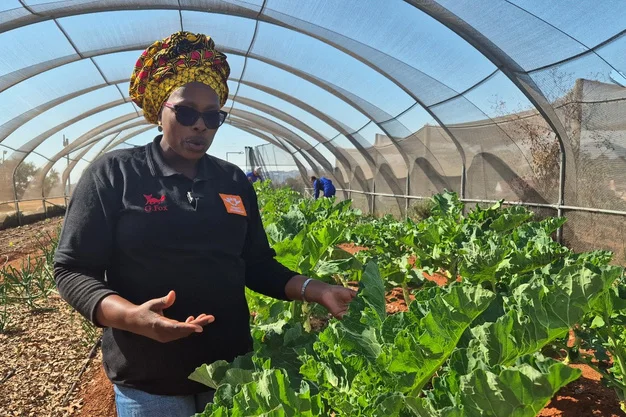
Initially focused on aquaponics—a farming method combining hydroponics and aquaculture—the Hub has since expanded to open-field farming and seedling propagation. "We realised the high costs of organic seedlings and decided to produce our own for our projects," added Ndamane.
The Centres approach includes the development of a custom greenhouse exploring drip hydroponics and the creation of a vermicomposting enterprise that produces nutrient-rich compost and worm tea. These initiatives enable proof of concept for community projects, ensuring their success. "Before introducing projects to communities, we ensure that they are impactful and effective, contributing to UJs goal of societal impact," Ndamane said.
Nurturing future agriculturists and farmers
The CEI also serves as a training ground for future agriculturists. Malebo Rakgoale, a crop science student from the Tshwane University of Technology, leads the nursery at the Hub as part of her experiential learning. "We produce a variety of seedlings and microgreens, such as rocket, mustard, cabbage, and parsley," Rakgoale explained. Along with other students, she is gaining hands-on experience in sustainable farming practices.
Site Agri Manager Mapenane Kgatitsoe, an agronomist, oversees the agricultural activities at CEI, ensuring that production remains environmentally responsible. "We are promoting food security in a sustainable way, using resources that will still be available in the next 20 years," she stated. The Hub aims to eliminate synthetic products such as fertilisers and pesticides, focusing instead on organic methods and natural resources.
Source: GovNews archive · Original publication ↗


